
Editor Summary
Services Growth & Effectiveness Strategy is a 91-slide PowerPoint toolkit offering a methodology for service growth and operational effectiveness, crafted with the rigor associated with McKinsey, Bain, and BCG-quality frameworks (not affiliated).
Read moreIncludes market segmentation templates, customer needs assessment frameworks, competitive analysis matrices, capabilities assessment tools, pricing strategy templates, and strategic plan development frameworks. Target users include corporate executives, business development teams, strategy consultants, and operations leaders. Used for market assessments, pricing and bundling work, and strategic planning. Sold as a digital download on Flevy.
Use this deck when margins or competitive pressure require shifting focus toward service offerings—during strategic planning, market-entry assessments, pricing reviews, or cross-functional workshops to align on customer needs and capabilities.
Corporate executives defining growth objectives and translating market insights into prioritized service capabilities during planning sessions.
Business development teams sizing markets and selecting target segments using market segmentation templates and growth analysis.
Strategy consultants building competitive benchmarks and ROI-backed business cases for service initiatives.
Operations leaders optimizing spare-parts, inventory, and service delivery using inventory assessment tools.
The sequence—market sizing, customer needs assessment, competitive and capabilities benchmarking, then ROI-driven plan development—reflects hypothesis-led, problem-structuring workflows used at McKinsey, Bain, and BCG.
Today, companies face shrinking margins in many of their products due to fierce competition in the marketplace. Service offering becomes not only a major growth and profit contributor, but also a key competitive advantage.
This toolkit provides an approach and tools that can help your organization to assess the situation and develop an effective service strategy.
Contents include:
• Market sizing, segments, and growth analysis
• Customer needs assessment
• Competitive assessment
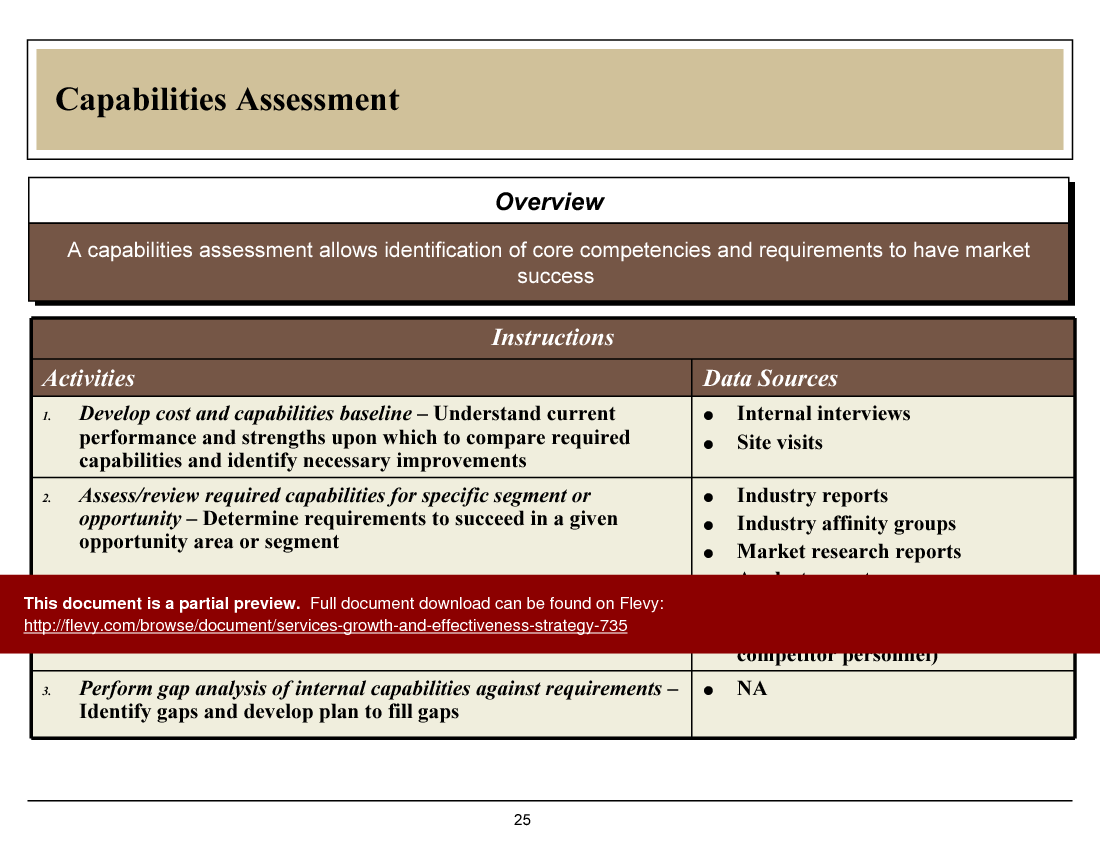
• Capabilities assessment
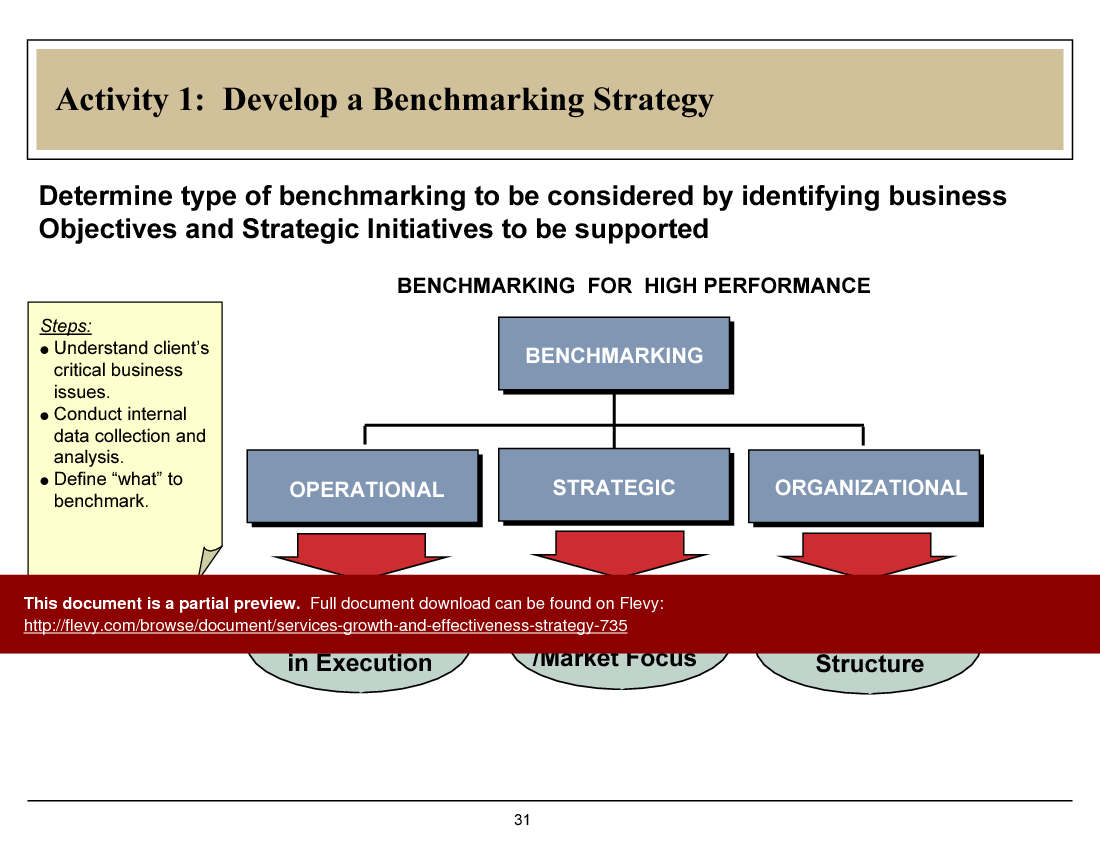
• Benchmarking/best practices
• Alliance approach
• Spare parts/inventory assessment
• Pricing and bundling
• Business case/ROI analysis
• Strategic plan development
This comprehensive toolkit also delves into the critical aspects of market segmentation and customer experience lifecycle. It provides detailed steps for defining market opportunities, determining attributes for target segments, and selecting those segments. The toolkit emphasizes the importance of internal data collection and hypothesis development, ensuring that customer needs are thoroughly understood and addressed.
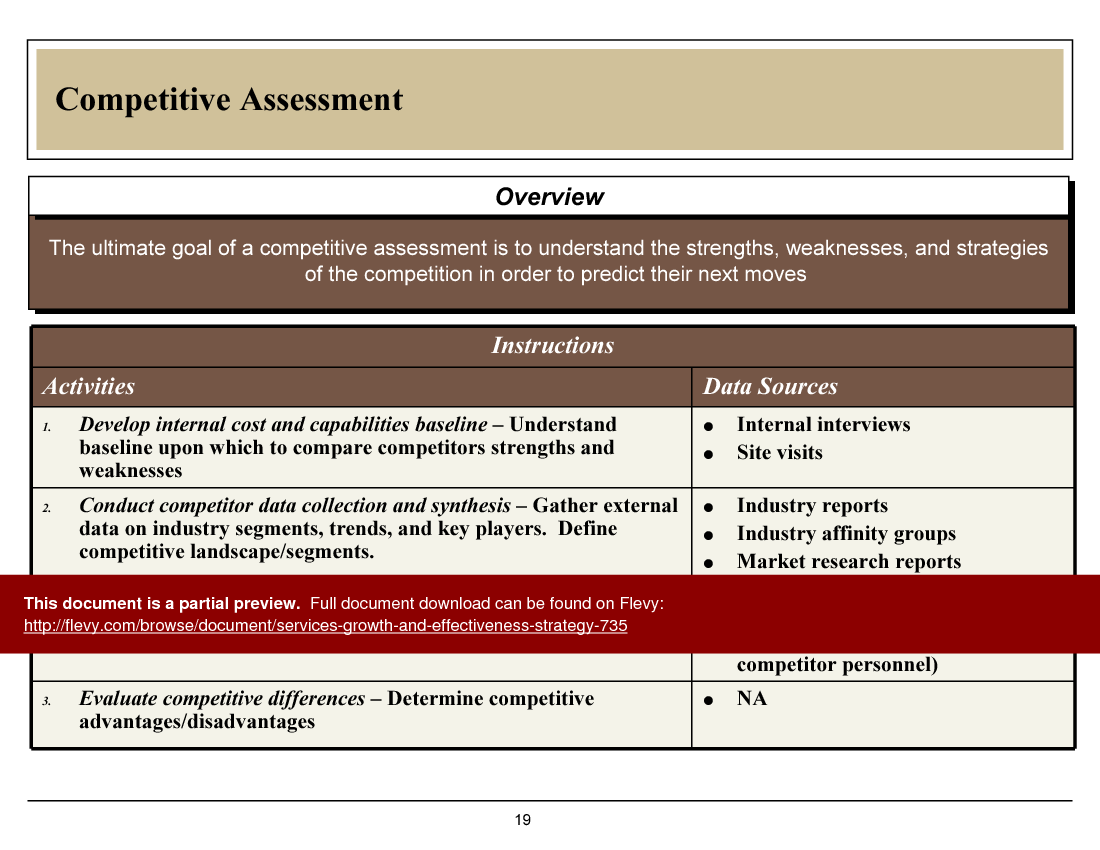
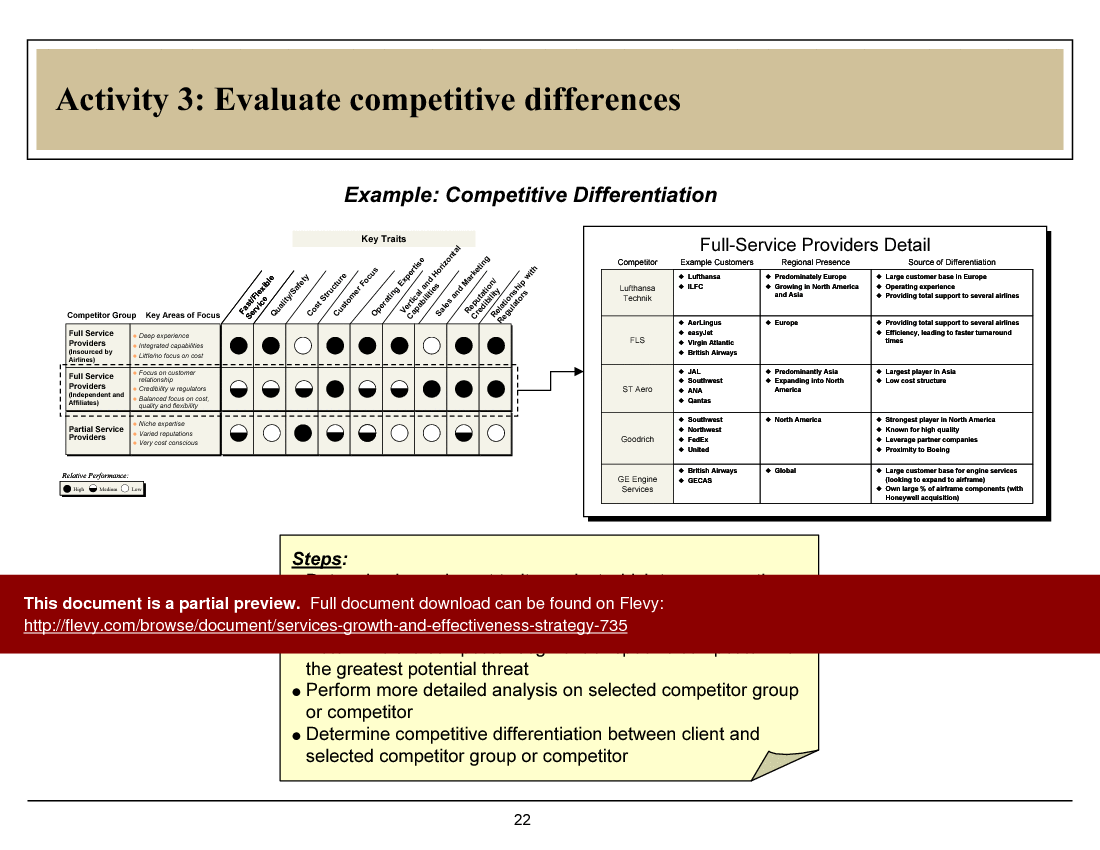
The document includes a robust framework for competitive assessment, helping organizations understand their strengths and weaknesses relative to competitors. It guides you through developing a cost and capabilities baseline, gathering competitor data, and evaluating competitive differences. This approach ensures that your service strategy is not only effective, but also sustainable in a competitive landscape.
Additionally, the toolkit covers essential elements of pricing and bundling strategies. It provides a structured approach to understanding customer value, synthesizing data for pricing analysis, and segmenting products to identify market opportunities. The document also highlights the importance of developing a business case and establishing ROI, ensuring that all strategic initiatives are financially viable and aligned with organizational goals.
Got a question about the product? Email us at support@flevy.com or ask the author directly by using the "Ask the Author a Question" form. If you cannot view the preview above this document description, go here to view the large preview instead.
MARCUS OVERVIEW
This synopsis was written by Marcus [?] based on the analysis of the full 91-slide presentation.
Executive Summary
The Services Growth & Effectiveness Strategy presentation is a consulting-grade toolkit designed to empower organizations in developing a robust strategy for service growth and operational effectiveness. This deck, crafted with the rigor expected from McKinsey, Bain, or BCG-quality frameworks (not affiliated), provides actionable insights into market analysis, customer needs, competitive assessments, and pricing strategies. Buyers will be equipped to quantify market opportunities, assess customer needs, benchmark against competitors, and develop a strategic plan that drives sustainable growth.
Who This Is For and When to Use
• Corporate executives seeking to enhance service offerings and drive growth.
• Business development teams focused on identifying market opportunities and customer needs.
• Strategy consultants working on service effectiveness projects.
• Operations leaders tasked with optimizing service delivery and performance metrics.
Best-fit moments to use this deck:
• During strategic planning sessions to define growth objectives and service capabilities.
• When conducting market assessments to identify new service opportunities.
• In workshops aimed at aligning teams on customer needs and competitive positioning.
Learning Objectives
• Define key market segments and assess their growth potential.
• Build a comprehensive understanding of customer needs and preferences.
• Establish competitive benchmarks to evaluate service effectiveness.
• Identify core competencies required for market success.
• Develop pricing strategies that enhance revenue and market positioning.
• Create a strategic plan that outlines actionable steps for service growth.
Primary Topics Covered
• Market Sizing and Segmentation - Analyze market opportunities by segmenting industries and quantifying potential growth areas.
• Customer Needs Assessment - Identify customer segments based on needs, values, and behaviors to tailor service offerings effectively.
• Competitive Assessment - Evaluate competitors' strengths and weaknesses to inform strategic positioning.
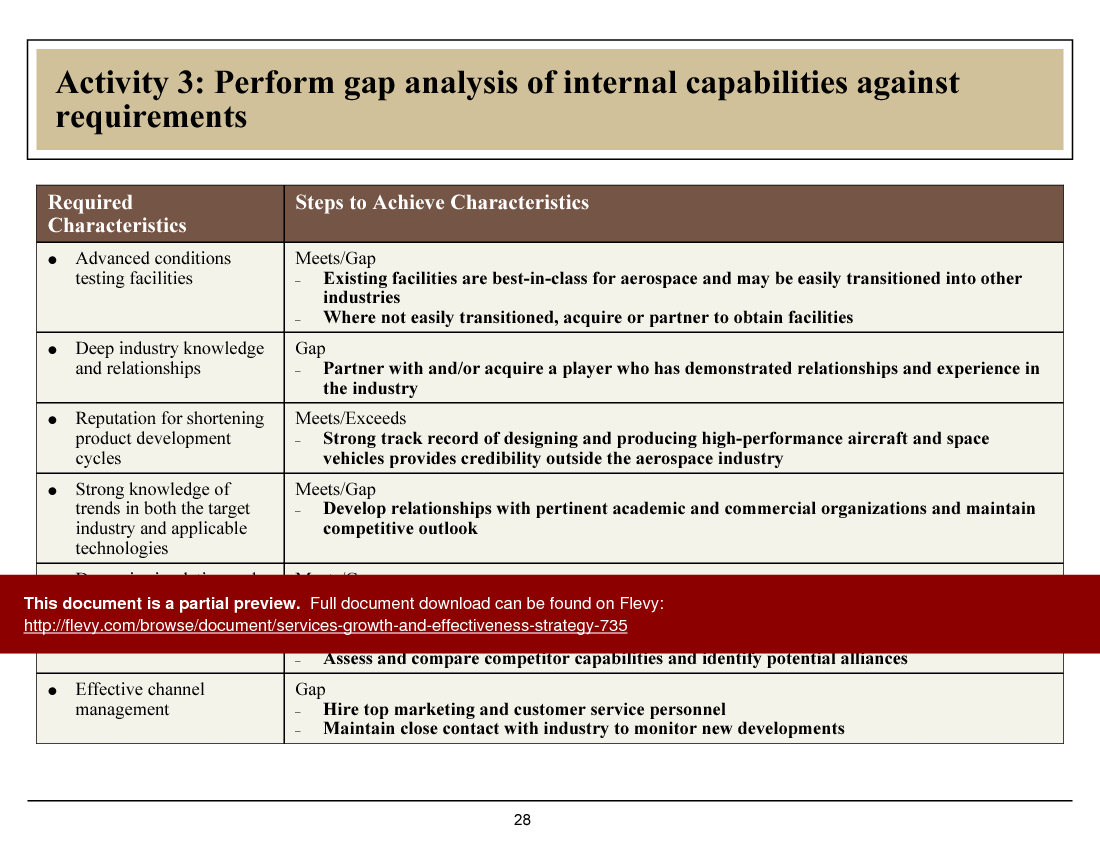
• Capabilities Assessment - Assess internal capabilities against market requirements to identify gaps and improvement areas.
• Benchmarking Best Practices - Utilize industry benchmarks to identify performance gaps and best practices.
• Pricing and Bundling Strategies - Develop pricing models and bundling opportunities to enhance revenue streams.
Deliverables, Templates, and Tools
• Market segmentation templates to categorize and prioritize target segments.
• Customer needs assessment frameworks to identify and analyze customer preferences.
• Competitive analysis matrices to evaluate market positioning against key competitors.
• Capabilities assessment tools to benchmark internal competencies against market needs.
• Pricing strategy templates to guide pricing decisions and bundling opportunities.
• Strategic plan development frameworks to outline actionable steps for implementation.
Slide Highlights
• Overview of market sizing methodologies and segmentation strategies.
• Visual representation of customer experience lifecycle and touchpoints.
• Competitive landscape analysis highlighting key players and market dynamics.
• Capabilities assessment framework detailing core competencies and performance metrics.
• Pricing analysis showcasing potential revenue impacts and market positioning.
Potential Workshop Agenda
Market Opportunity Identification Session (90 minutes)
• Review market sizing and segmentation findings.
• Discuss customer needs and preferences based on assessments.
• Identify key competitive advantages and gaps.
Strategic Planning Workshop (120 minutes)
• Develop actionable strategies based on market and customer insights.
• Prioritize initiatives for service growth and operational effectiveness.
• Create a roadmap for implementation and performance tracking.
Customization Guidance
• Tailor market segmentation criteria based on specific industry dynamics and customer profiles.
• Adjust competitive assessment frameworks to reflect unique market conditions and competitors.
• Modify pricing strategies to align with organizational goals and customer value perceptions.
• Incorporate specific metrics and KPIs relevant to the organization’s service offerings.
Secondary Topics Covered
• Best practices in service delivery and operational efficiency.
• Strategic alliance frameworks for leveraging partnerships.
• Inventory management strategies for spare parts and service components.
• Technology considerations for enhancing service capabilities.
• ROI analysis methodologies for evaluating service investments.
Topic FAQ
What are the core steps to develop a services growth strategy?
A typical sequence starts with market sizing and segmentation, then customer needs assessment, competitive and capabilities assessment, benchmarking of best practices, pricing and bundling analysis, ROI/business-case development, and finishes with a strategic plan. These steps map to the toolkit’s Table of Contents ending with Strategic Plan Development (page 83).
How should I approach market segmentation for service offerings?
Start by defining segment attributes, estimating segment size and growth, and prioritizing segments based on value and fit. The toolkit emphasizes internal data collection and hypothesis development to validate choices, using market segmentation templates and Market Sizing, Segments, and Growth Analysis (page 4).
What methods can I use to assess customer needs for services?
Use systematic frameworks to capture customer preferences, value drivers, and touchpoints across the customer experience lifecycle, then synthesize into segment-specific requirements. The toolkit provides customer needs assessment frameworks and a visual customer experience lifecycle depiction on Customer Needs Assessment (page 10).
What should a competitive assessment for services include?
Conduct a strengths/weaknesses analysis, build a cost and capabilities baseline, gather competitor data, and evaluate differences that affect positioning. The toolkit supports this with competitive analysis matrices and guidance in the Competitive Assessment section (page 17).
What should I look for when buying a services growth toolkit?
Prioritize toolkits that include market segmentation templates, customer needs frameworks, competitive and capabilities assessment tools, pricing and bundling templates, and business-case/ROI models so you can move from analysis to a strategic plan; the Services Growth & Effectiveness Strategy lists these core templates and frameworks.
How much time and what team resources are needed to run a services strategy workshop?
The toolkit provides workshop agendas showing practical timeboxes: a 90-minute Market Opportunity Identification Session and a 120-minute Strategic Planning Workshop, typically run with a cross-functional team of strategy, BD, operations, and finance stakeholders as indicated in the Potential Workshop Agenda.
Which framework helps optimize spare parts and inventory for service operations?
Use a spare parts/inventory assessment to map current inventory, align stocking policies to service requirements, and identify cost-to-serve tradeoffs. The toolkit includes a Spare Parts/Inventory Assessment and inventory management strategies in the Spare Parts/Inventory Assessment section (page 46).
How can I realign service capabilities after a merger or acquisition?
Conduct a capabilities assessment to identify gaps versus market requirements, benchmark best practices, evaluate alliance opportunities, and build an ROI-backed strategic plan to integrate or divest services. The toolkit addresses this through Capabilities Assessment and Strategic Plan Development (page 23 and page 83).
Document FAQ
These are questions addressed within this presentation.
What is the primary focus of the Services Growth & Effectiveness Strategy presentation?
The presentation focuses on developing a comprehensive strategy for enhancing service growth and operational effectiveness through market analysis, customer insights, and competitive assessments.
How can this toolkit be applied in a corporate setting?
This toolkit can be utilized during strategic planning sessions, market assessments, and workshops aimed at aligning teams on service growth objectives and customer needs.
What methodologies are included in the toolkit?
The toolkit includes methodologies for market sizing, customer needs assessment, competitive analysis, capabilities assessment, benchmarking, and pricing strategies.
Can the templates be customized for specific industries?
Yes, the templates and frameworks can be tailored to reflect the unique characteristics and dynamics of specific industries.
What outcomes can be expected from using this presentation?
Users can expect to gain actionable insights into market opportunities, customer needs, and competitive positioning, leading to a well-defined strategic plan for service growth.
Is this presentation suitable for all organizational levels?
While primarily designed for corporate executives and strategy teams, the insights and frameworks can be beneficial for various organizational levels involved in service delivery and growth initiatives.
How does the toolkit address competitive analysis?
The toolkit provides frameworks for evaluating competitors' strengths and weaknesses, enabling organizations to position themselves effectively in the market.
What is the significance of the pricing and bundling strategies included?
Pricing and bundling strategies are crucial for enhancing revenue streams and improving market positioning by aligning offerings with customer value perceptions.
Glossary
• Market Segmentation - The process of dividing a market into distinct groups of buyers with different needs or behaviors.
• Customer Needs Assessment - A systematic approach to understanding customer preferences and requirements.
• Competitive Assessment - An evaluation of competitors’ strengths, weaknesses, and strategies.
• Capabilities Assessment - An analysis of an organization's core competencies and performance metrics.
• Benchmarking - The practice of comparing business processes and performance metrics to industry bests.
• Pricing Strategy - A method for determining the best price for a product or service based on market conditions.
• Bundling - The practice of offering multiple products or services together as a single combined offering.
• ROI (Return on Investment) - A financial metric used to evaluate the profitability of an investment.
• Strategic Plan - A document that outlines an organization's direction and the actions needed to achieve its goals.
• Service Effectiveness - A measure of how well a service meets customer needs and expectations.
• Operational Efficiency - The ability to deliver services effectively while minimizing costs and maximizing value.
• Technology Strategy - A plan for leveraging technology to enhance service capabilities and operational performance.
• Alliance Strategy - A framework for developing and managing strategic partnerships to achieve business objectives.
• Inventory Management - The process of overseeing and controlling inventory levels to meet customer demand efficiently.
• Market Analysis - The study of market conditions to identify opportunities and threats.
• SWOT Analysis - A strategic planning tool used to identify strengths, weaknesses, opportunities, and threats.
• Customer Experience Lifecycle - The stages a customer goes through when interacting with a service or product.
• Performance Metrics - Measures used to evaluate the effectiveness and efficiency of a service or process.
• Best Practices - Proven methods or techniques that have consistently shown superior results.
• Strategic Objectives - Specific goals that an organization aims to achieve as part of its strategic plan.
This PPT slide outlines a structured approach to competitor data collection, focusing on the Competitive Landscape, Competitors’ Customers & Offerings, and Competitor Concentration. The Competitive Landscape identifies key competitors, including airlines and service providers, categorizing them into full-service providers, original equipment manufacturers (OEMs), and partial providers, while noting monopolistic tendencies and fragmented competition. The Competitors’ Customers & Offerings section highlights significant full-service providers and their customer segments, emphasizing the need for continuous development in services. The Competitor Concentration section visually represents market share distribution, illustrating the dominance of full-service providers. The research process involves secondary research for initial insights, formulating key questions, primary research with contacts, and refining hypotheses to enhance industry understanding and inform strategic decisions.
This PPT slide outlines a strategic framework for developing metrics to monitor spare parts performance, structured around 4 key activities: A through D.
Activity A focuses on leveraging market position and improving availability by raising prices after removing certain parts from the catalog and enhancing inventory management for high-margin parts.
Activity B promotes customer repairs over upgrades, emphasizing price reductions on catalog and non-catalog parts, identifying cross-selling opportunities, and ensuring timely delivery.
Activity C maintains current pricing for low to medium-valued parts, advocating for customer-centric and market-oriented pricing strategies.
Activity D suggests an exit strategy for unprofitable parts, including price increases for removed parts, licensing manufacturing rights, and reducing excess inventory through discounts.
This comprehensive approach integrates pricing strategies, marketing communications, and inventory management to enhance effectiveness.
This PPT slide outlines a structured approach to developing a business case and measuring return on investment (ROI). It includes 2 main sections: Activities and Data Sources. The first activity focuses on establishing baseline metrics for cost and performance, identifying improvement opportunities through internal financial data. Next, it emphasizes identifying all benefits, including intangible aspects, using benchmarking and best practices as data sources. The third activity defines implementation costs and timelines, essential for monitoring progress, followed by capturing and prioritizing opportunities based on implementation requirements. The final step involves completing a financial analysis, ensuring a comprehensive approach that integrates qualitative and quantitative data for informed decision-making.
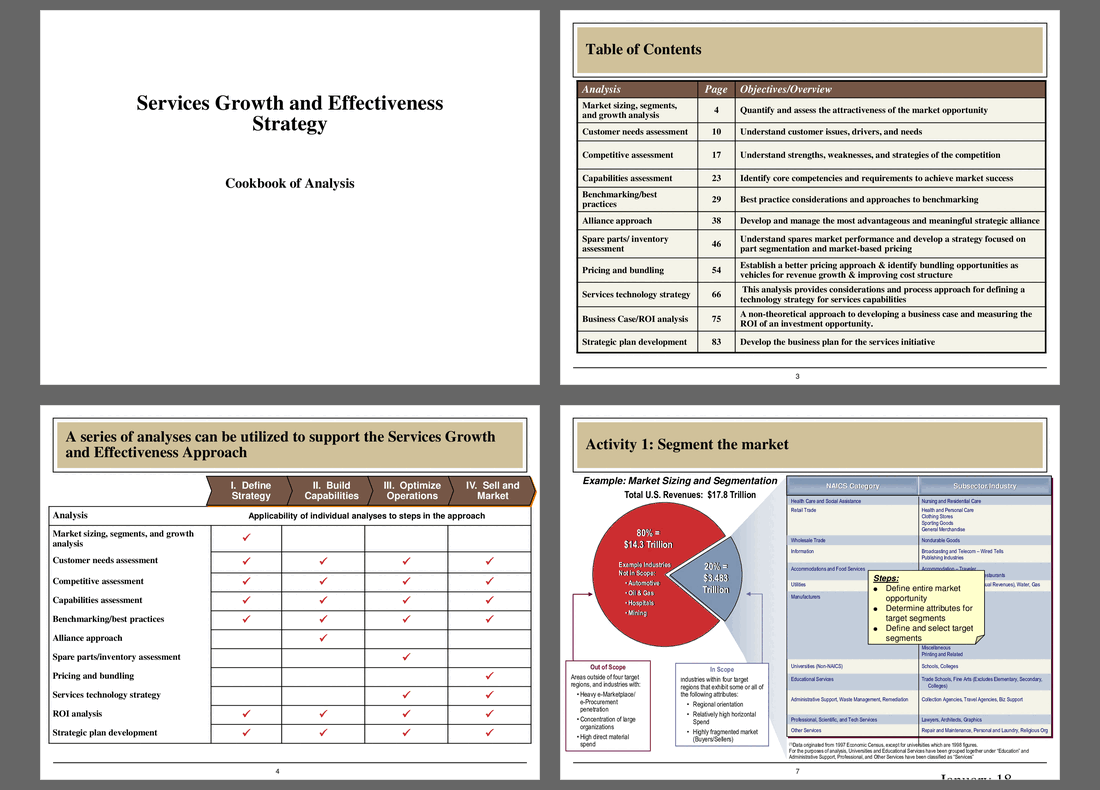
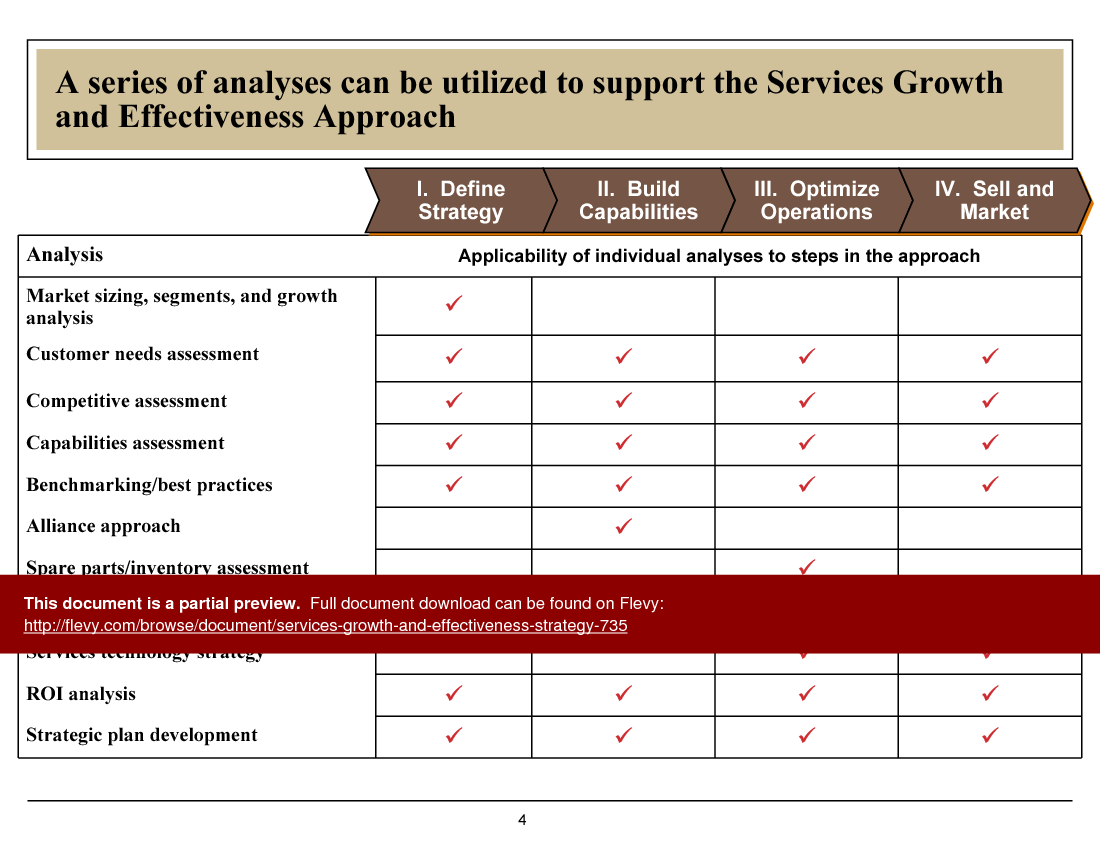
This PPT slide outlines a structured framework for analyzing service growth and effectiveness through 4 main steps: Define Strategy, Build Capabilities, Optimize Operations, and Sell and Market. Key analyses include "Market sizing, segments, and growth analysis," essential for understanding market dynamics across all steps, and "Customer needs assessment," which aligns services with customer expectations. "Competitive assessment" and "Capabilities assessment" are critical in the initial phases, focusing on external and internal evaluations. "Benchmarking/best practices" enhances service offerings during capability building. The "Alliance approach" and "Spare parts/inventory assessment" target operational optimization and selling strategies. Additionally, pricing and bundling strategies, along with services technology strategy, are vital for effective market positioning and service delivery.
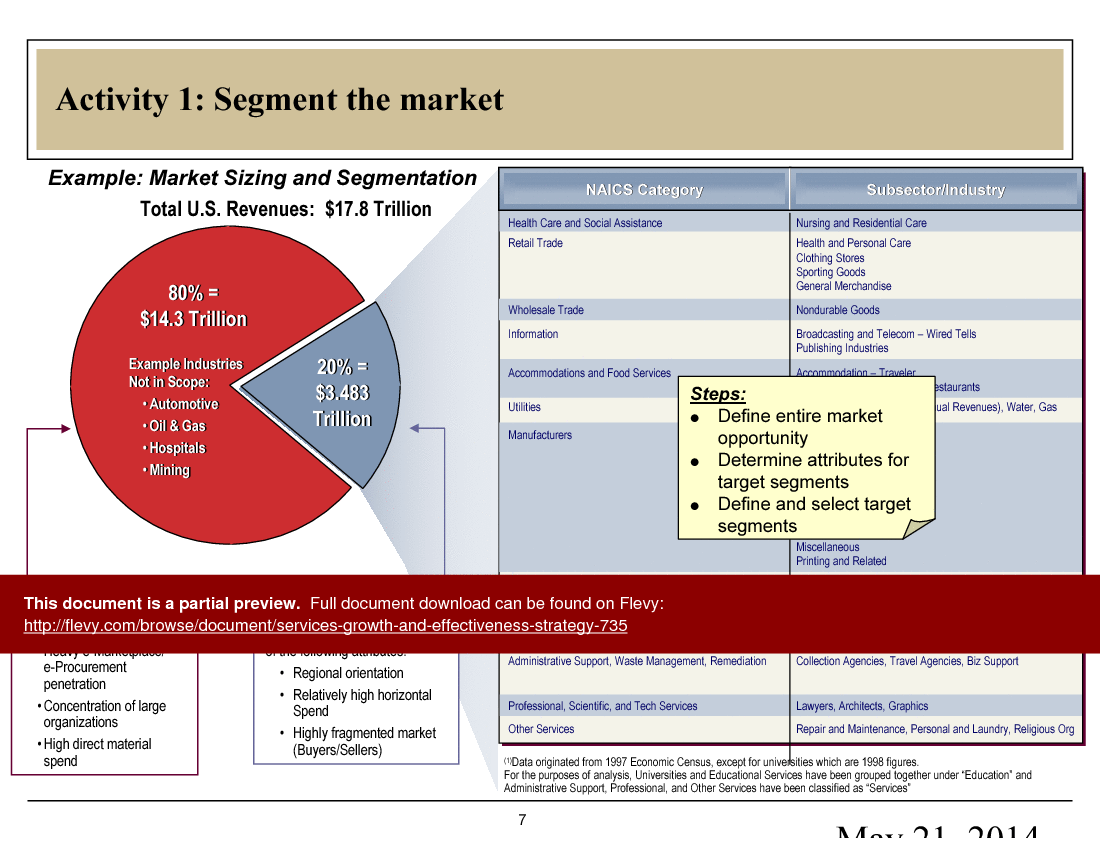
This PPT slide focuses on U.S. market segmentation and sizing, totaling $17.8 trillion. It divides the market into 2 segments: 80% accounting for $14.3 trillion and 20% valued at $3.483 trillion. Excluded industries include automotive and oil & gas, clarifying the analysis scope. The right side categorizes sectors using the NAICS framework, detailing subsectors like healthcare, retail trade, and utilities to identify market opportunities. The methodology includes defining the market opportunity, determining attributes for target segments, and selecting specific segments for deeper analysis. This structured approach enables organizations to tailor strategies to meet the unique needs of each market area.


This toolkit outlines essential components for enhancing service growth and effectiveness. Key sections include market sizing, segments, and growth analysis, which quantify market opportunities. The customer needs assessment focuses on aligning services with client expectations, while the competitive assessment evaluates competitors' strengths and weaknesses for market positioning. The capabilities assessment identifies core competencies necessary for success. Benchmarking and best practices emphasize continuous improvement by learning from industry leaders. The alliance approach highlights strategic partnerships for leveraging external resources. The spare parts and inventory assessment analyzes market performance and pricing strategies. Pricing and bundling strategies refine approaches to drive revenue growth. The services technology strategy integrates technology into service capabilities. Finally, the business case and ROI analysis ensures strategic decisions are supported by solid financial rationale, addressing critical areas for enhancing service offerings and market effectiveness.
The "Alliance Approach" outlines a structured methodology for developing and managing strategic alliances. Key activities include: "Define objectives," which focuses on understanding motivations for forming alliances; "Determine alliance strategy," identifying external partnerships that align with the client's overall strategy; "Set boundary conditions," ensuring favorable terms and suitable partners; "Define internal infrastructure," establishing an organizational framework that clarifies roles and responsibilities; and "Manage performance," involving ongoing monitoring and assessment of the alliance's effectiveness. This framework aids organizations in leveraging alliances to achieve broader strategic goals.
This PPT slide details a spares situation analysis focused on inventory estimates and financial metrics across product groups. Estimated inventory by product group is segmented by distribution center and field location, totaling $43 million, with the highest contributions from EPSG and LSCA. The financial metrics reveal a cost of sales (COS) of $360 million and estimated write-downs of $2.7 million, representing 7.5% of COS, essential for assessing inventory management risks. Performance metrics include inventory turns and months of supply, with EPSG at 0.9 and LSCA at 0.65, critical for evaluating operational efficiency and guiding supply chain strategies.
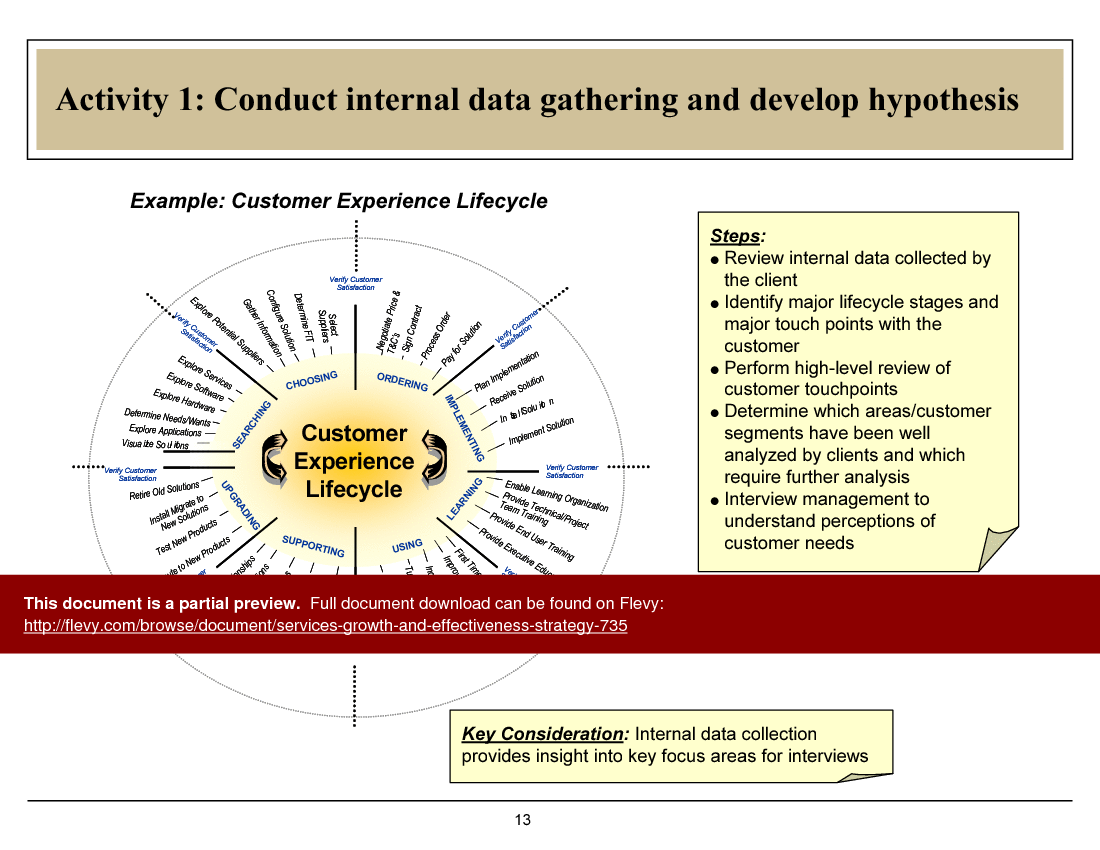
This PPT slide outlines a structured approach to internal data gathering and hypothesis development focused on the Customer Experience Lifecycle. It features a circular diagram illustrating stages of the customer journey: Searching, Choosing, Ordering, Learning, Using, Supporting, and Feedback. Each stage includes specific actions to enhance customer satisfaction. Key steps include reviewing internal data to understand customer interactions and identifying major lifecycle stages and touchpoints for mapping the customer journey. A high-level review of customer touchpoints assesses current strategy effectiveness, while targeted analysis of customer segments ensures efficient resource allocation. Interviewing management for qualitative insights complements quantitative data, providing a comprehensive view of customer experiences.
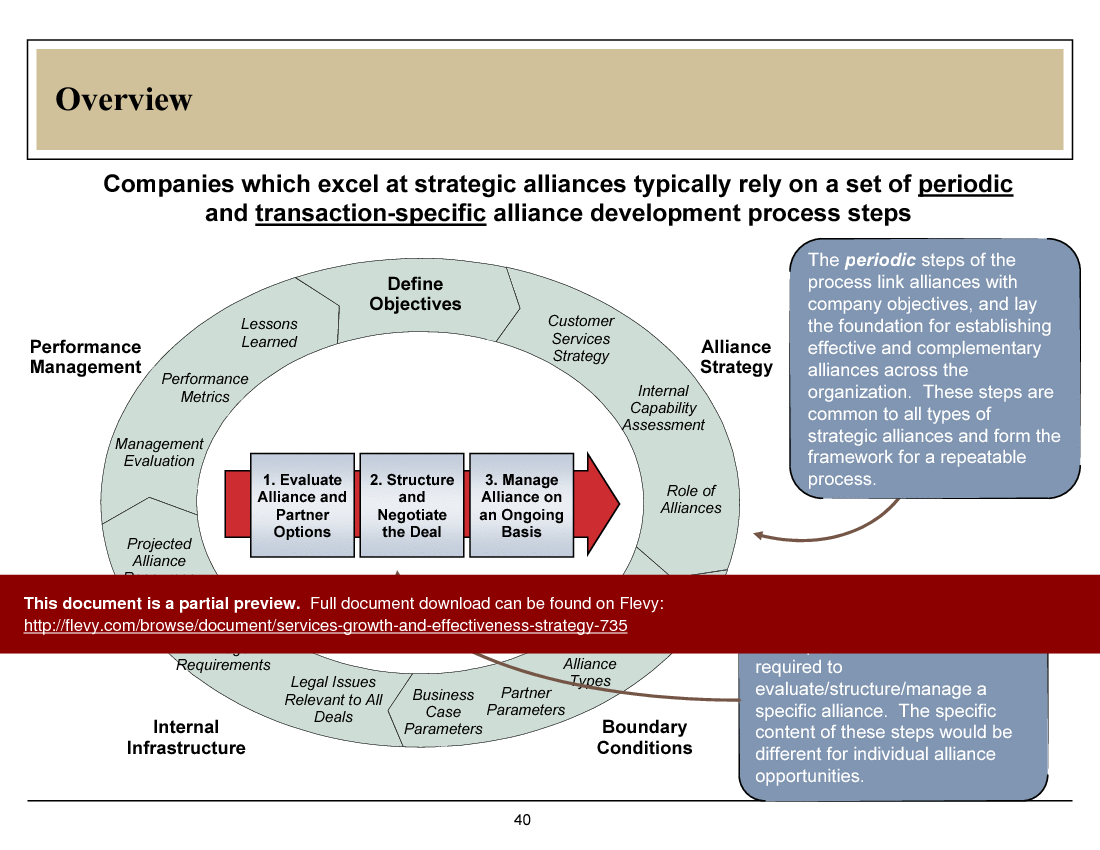
This PPT slide outlines the processes for forming strategic alliances, highlighting both periodic and transaction-specific steps in alliance development. The central diagram features key phases, beginning with "Define Objectives," which aligns alliances with company goals. The 3 main steps—Evaluate Alliance and Partner Options, Structure and Negotiate the Deal, and Manage Alliance on an Ongoing Basis—are essential for establishing and sustaining effective partnerships. Periodic steps link alliances to company objectives, creating a systematic approach to alliance management. Transaction-specific steps focus on detailed activities for evaluating, structuring, and managing individual alliances. This dual focus indicates a comprehensive strategy adaptable to various partnership scenarios, enhancing alliance strategies for organizations.
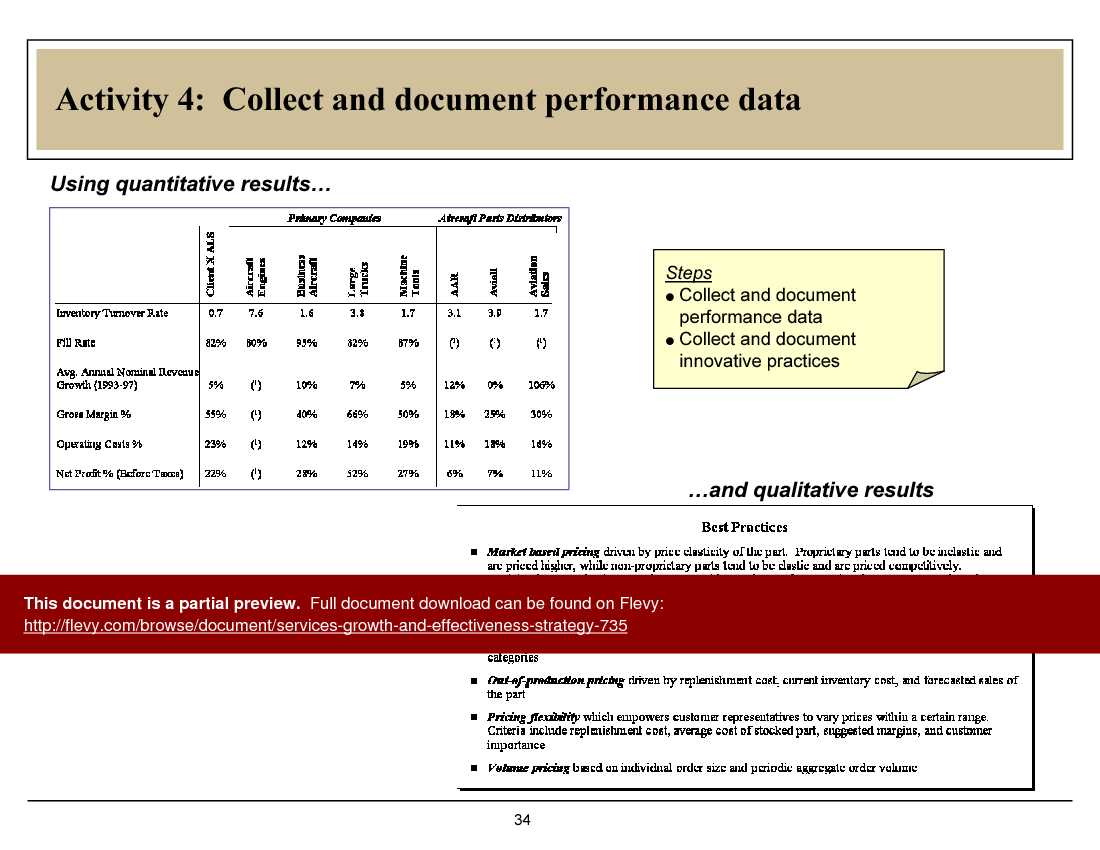
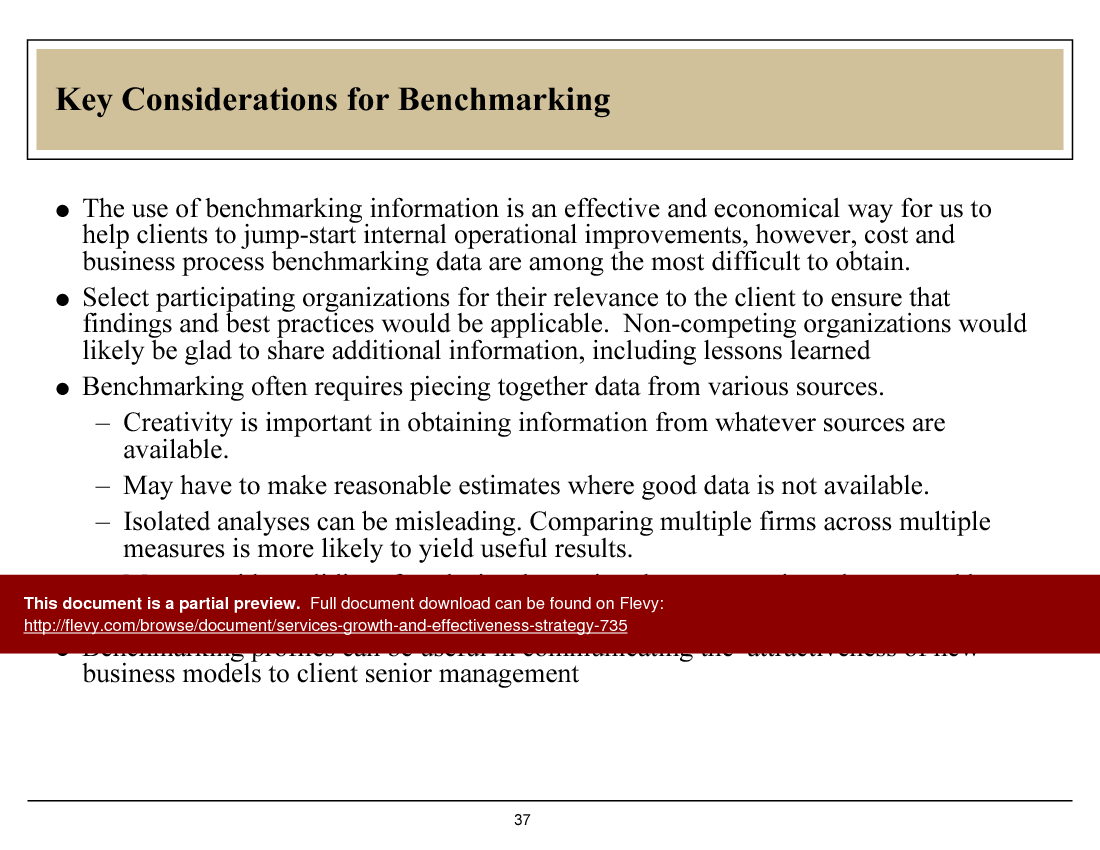
This PPT slide outlines a structured approach to benchmarking, focusing on identifying activities and data sources for effective analysis. The matrix titled "Universe of Benchmarking Activities" categorizes activities based on value/insight and competitive assessment levels. Key activities include "DC Knowledgebase," "Syndicated Research," and "Informal Partner Interviews." Activities in the upper left quadrant, like "DC Knowledgebase," are high in value, while those like "Informal Competitor Interviews" indicate lesser value. Steps for assessing resources—time, budget, and personnel—are detailed to ensure feasibility of benchmarking activities. Quantitative data sources include "DC Knowledgebase" and "Syndicated Research," while qualitative sources encompass "Client Available Studies" and "Public Research," providing a comprehensive understanding of the benchmarking process for informed decision-making.
This PPT slide outlines a strategic framework for establishing baseline metrics in contact centers. It includes steps for gathering and analyzing data, emphasizing the collection of strategic planning materials and conducting interviews with senior management and external experts. Identifying key business performance metrics and improvement targets is crucial for assessing operational effectiveness. The slide presents detailed operating metrics across regions, including 103 contact centers and 53 sites in the Americas, Europe, and Asia Pacific, with a workforce handling 6 million annual contacts through calls, emails, and faxes. A financial overview indicates a cost baseline of $165 million annually, encompassing labor, benefits, and facility costs, essential for evaluating operational efficiency and cost-effectiveness.
Since 2012, we have provided business templates to over 10,000 businesses and organizations of all sizes, from startups and small businesses to the Fortune 100, in over 130 countries.
"I am extremely grateful for the proactiveness and eagerness to help and I would gladly recommend the Flevy team if you are looking for data and toolkits to help you work through business solutions."
– Trevor Booth, Partner, Fast Forward Consulting
"I have found Flevy to be an amazing resource and library of useful presentations for lean sigma, change management and so many other topics. This has reduced the time I need to spend on preparing for my performance consultation. The library is easily accessible and updates are regularly provided. A wealth of great information."
– Cynthia Howard RN, PhD, Executive Coach at Ei Leadership
"I like your product. I'm frequently designing PowerPoint presentations for my company and your product has given me so many great ideas on the use of charts, layouts, tools, and frameworks. I really think the templates are a valuable asset to the job."
– Roberto Fuentes Martinez, Senior Executive Director at Technology Transformation Advisory
"FlevyPro has been a brilliant resource for me, as an independent growth consultant, to access a vast knowledge bank of presentations to support my work with clients. In terms of RoI, the value I received from the very first presentation I downloaded paid for my subscription many times over! The
quality of the decks available allows me to punch way above my weight – it's like having the resources of a Big 4 consultancy at your fingertips at a microscopic fraction of the overhead.
"
– Roderick Cameron, Founding Partner at SGFE Ltd
"Flevy is our 'go to' resource for management material, at an affordable cost. The Flevy library is comprehensive and the content deep, and typically provides a great foundation for us to further develop and tailor our own service offer."
– Chris McCann, Founder at Resilient.World
"Flevy is now a part of my business routine. I visit Flevy at least 3 times each month.
Flevy has become my preferred learning source, because what it provides is practical, current, and useful in this era where the business world is being rewritten.
many challenges and there is the need to make the right decisions in a short time, with so much scattered information, we are fortunate to have Flevy. Flevy investigates, selects, and puts at our disposal the best of the best to help us be successful in our work.
"
– Omar Hernán Montes Parra, CEO at Quantum SFE
"As a young consulting firm, requests for input from clients vary and it's sometimes impossible to provide expert solutions across a broad spectrum of requirements. That was before I discovered Flevy.com.
Through subscription to this invaluable site of a plethora of topics that are key and crucial to consulting, I
have been able to exceed expectations and deliver quality advice and solutions to my clients. The quality and expertise of the authors are exemplary and gives me great confidence to use as part of my service offerings.
I highly recommend this company for any consultant wanting to apply international best practice standards in their service offerings.
"
– Nishi Singh, Strategist and MD at NSP Consultants
"Flevy.com has proven to be an invaluable resource library to our Independent Management Consultancy, supporting and enabling us to better serve our enterprise clients.
The value derived from our [FlevyPro] subscription in terms of the business it has helped to gain far exceeds the investment made, making a subscription a no-brainer for any growing consultancy – or in-house strategy team."
– Dean Carlton, Chief Transformation Officer, Global Village Transformations Pty Ltd.
Save with Bundles
This document is available as part of the following discounted bundle(s):
Download our free compilation of 50+ Strategy & Transformation slides and templates. Frameworks include McKinsey 7-S, Balanced Scorecard, Disruptive Innovation, BCG Curve, and many more.